A global technology company wanted to launch a gamer community — and to own the capability, not rent it. I built a partnership model that incubated the team while designing, building, and shipping the platform in two months.
- Role
- Digital practice director
- Team
- Blended internal, contract, and client staff
- Timeline
- Two months · launched at CES 2020
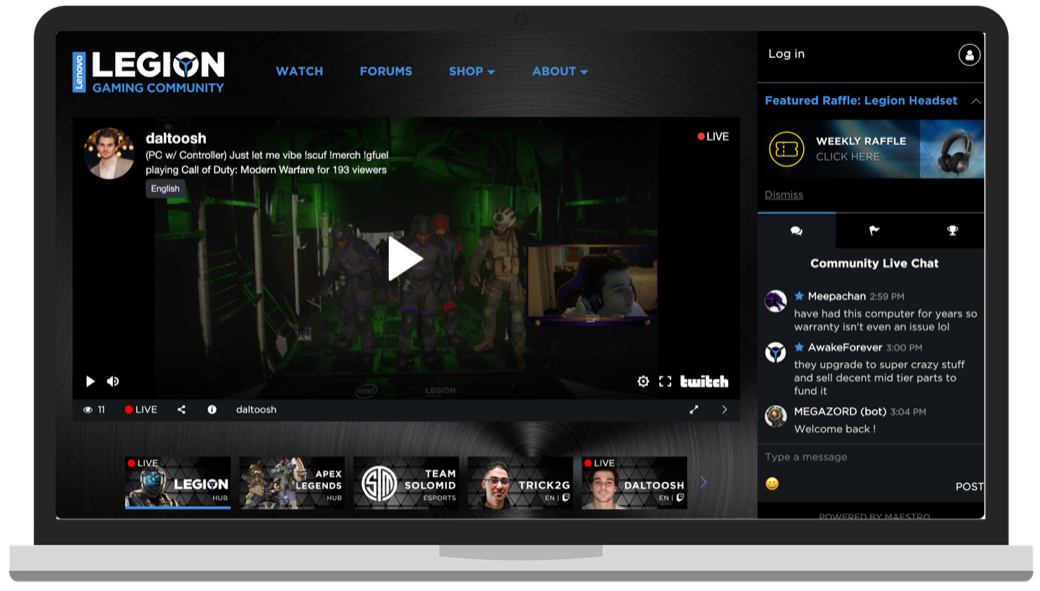
The business had to move from a transactional model to one that could genuinely engage gamers — and build that muscle in-house.
So I proposed a partnership model: my company would incubate the talent model while designing, building, and launching the gamer platform for their growing business.
- Customers
- Youthful PC gamers want to associate with other gamers and the technologies that represent their interests — and to show up for live events.
- The business
- A pivot away from a purely transactional relationship toward one that could deeply and relevantly engage the gamer audience.
- The talent gap
- They wanted a community competency inside their own four walls. A consultancy would be too expensive to keep; hiring the team directly would take too long.
Using a contingent-labor model, I worked alongside a recruiting team to vet candidates on three things at once: design, online community development, and PC-based gaming.
- Embed
- Put my team into the fabric of the client’s team, not next to it.
- Oversee
- Daily and weekly oversight at the product and project level, staffed with in-house, non-billable talent.
- Align
- Stay strategically aligned with client leadership so the team was ready to take on the next phase of the roadmap.
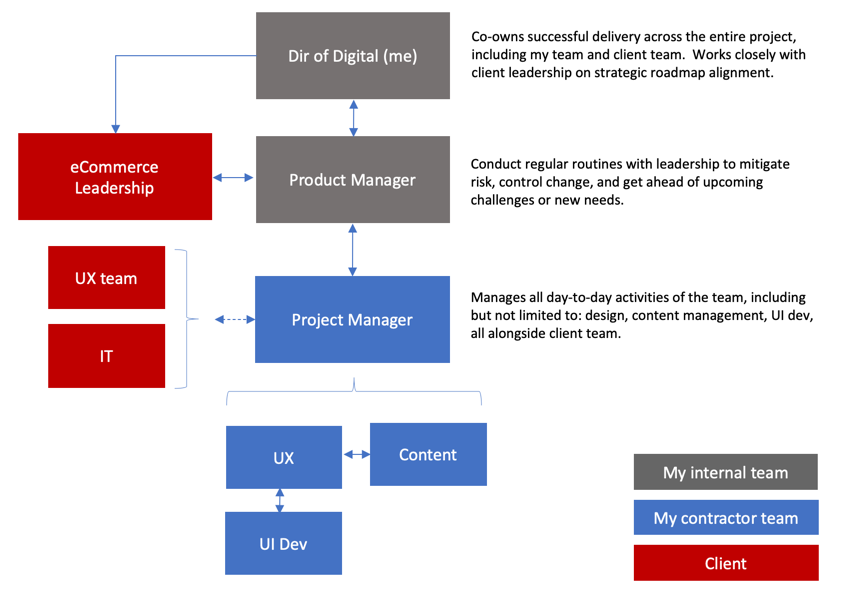
We deployed the team inside the client’s four walls as if they were part of the existing full-time team. Accountability went up; silos came down.
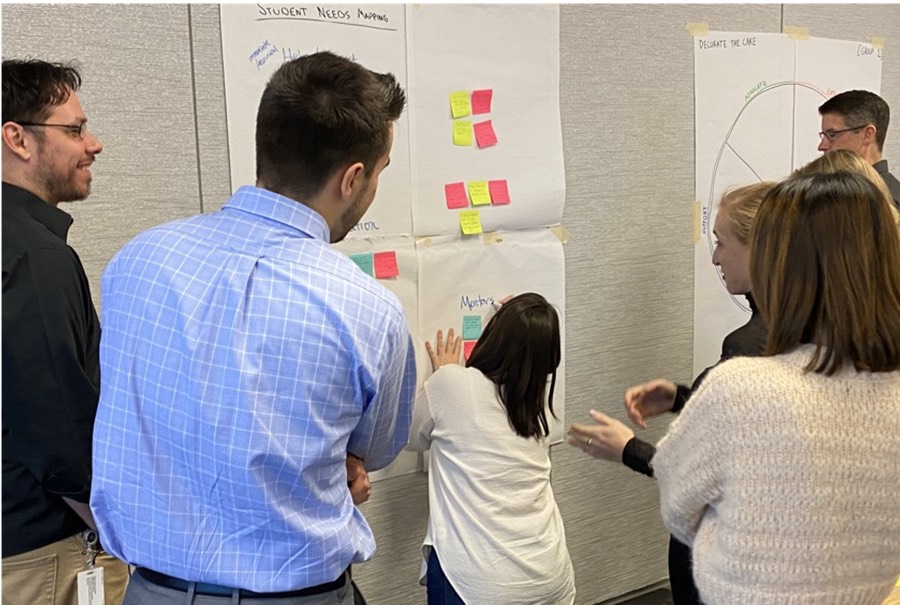
We mapped the outcomes my team and their business would own together.
- Research
- Survey existing gamer customers to understand motivations, intent, and behaviors.
- Journey
- Map the gamer personas to intentional interaction “moments” that engage gamers with the brand and with each other.
- Ecosystem
- Evaluate SaaS community platforms and recommend one that could serve gamers now and scale to other segments later.
- Design
- Design the gamer system around user needs and platform capabilities.
- Content
- Curate from outside channels like Twitch and YouTube, produce original content such as live events, and moderate the discussion.
- Develop + deploy
- Stand up an agile process for an MVP launch, then ship iterative releases, flexing the backlog as requirements moved.
The co-managed model shipped the platform in two months and demoed at CES 2020 — and the team kept designing and releasing after launch.
- More than 14,000 unique visitors in the first two months, on organic marketing alone.
- A 56-minute average time on site, per user, per day — a signal of real content value.
- Three volunteer moderators identified, trained, and promoted from within the community.
- A 4,000-participant follow-up survey to validate features and steer where the community goes next.
launched at CES 2020