Cloudbeds had outgrown its information architecture and its Vue.js front-end just as it was pushing up-market in hospitality tech. I led a year of research and design to create Nebula — a React and Chakra UI design system — then rolled it out squad by squad so the platform could modernize without stopping to rebuild.
- Role
- Senior Director, UX
- Team
- Direct reports from South America to Poland
- Timeline
- One year of research & design · iterative rollout since 2021
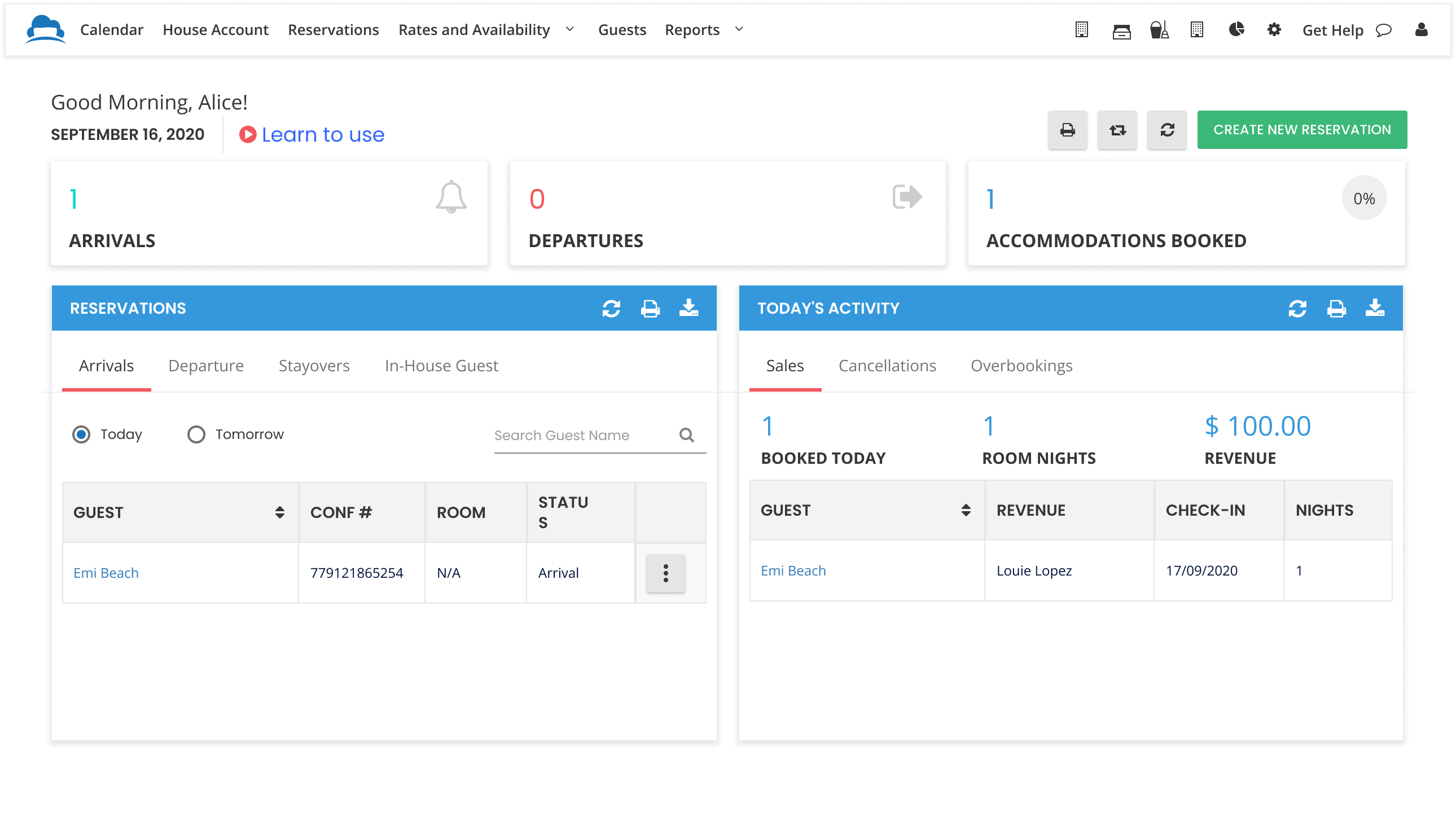
Cloudbeds had outgrown the front-end it was built on — and it was still growing.
As Cloudbeds moved up-market, the product stack kept expanding and the Vue.js front-end and information architecture underneath it couldn’t keep pace. It couldn’t scale to the demands of ever-evolving features, and every release widened the gap between what teams wanted to ship and what the platform could consistently support.
Its customers are mid-market hotels; its users are the people on staff — front desk and back office — running the property in real time. They needed four things at once:
- Consistency
- One responsive, accessible experience across a platform that had grown by accretion.
- Fewer clicks
- Cut the distance between a hotel employee and the thing they came to do.
- Guest context
- Surface the guest insight a decision depends on, at the moment it’s made.
- Clear signals
- Intuitive cues that help a property see how it’s doing and where to grow the business.
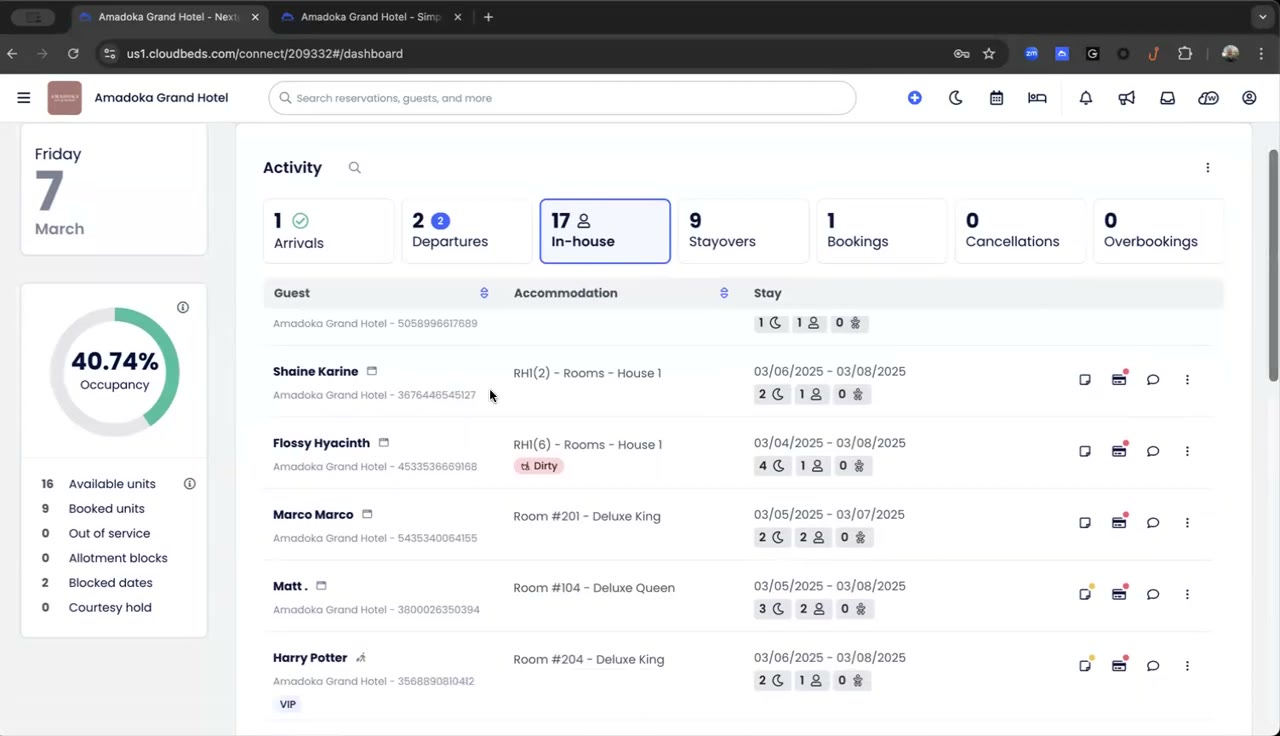
We set it up so the result would be a system that solved real problems and kept scaling — not a fresh coat of UI paint with a five-year shelf life.
A modern front-end
Rebuild on React, with Chakra UI as the framework and a library of reusable components documented in Storybook — one versioned, shared home for the patterns.
One team for UX and engineering
Put UX designers on the same team as front-end engineers and architects, with shared objectives, so component and interface decisions got made together instead of handed back and forth.
Research first
Lean on research to actually understand what hotel staff needed, so the work produced patterns that solved user problems instead of drifting into UI polish.
Tooling that lasts
Choose the tools and software deliberately, for a model that could sustain and scale — so we wouldn’t be redesigning again in five years.
We didn’t attempt one large, risky redesign. As new projects came online, we cross-trained the product and engineering squads on how to apply Nebula and let the system land iteratively.
The core team held the roadmap so old and new interactions wouldn’t fuse into a Frankenstein — and we stood up a design system manager to own that roadmap and turn each new project into an improvement opportunity.
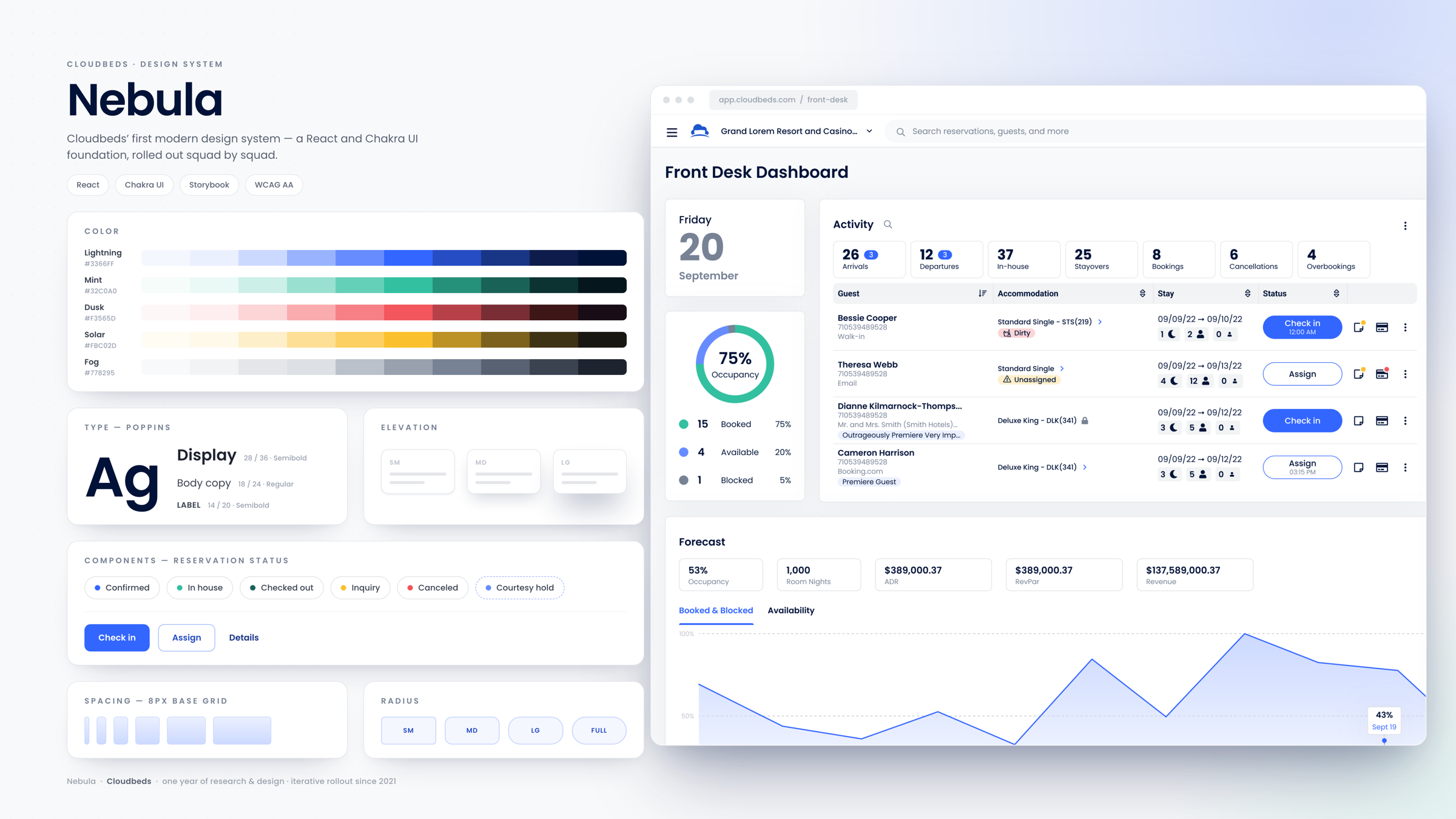
Nebula launched in 2021 — Cloudbeds’ first modern design system — sharing common patterns, components, and design tokens across the entire platform.
- Squads adopt Nebula as they touch each area, so the platform modernizes without a stop-the-world rewrite.
- A dedicated design system manager owns the roadmap and keeps old and new interactions from drifting apart.
- Design tokens give design and engineering one shared source of truth, from São Paulo to Kraków.
- The system is built to scale with the product stack — the next five years of features, not another redesign in five.
Placeholder metrics — v1 shipped 2021, adoption ongoing